©
Bundeswehr/MunkerGermany’s former Chiefs of Defence
The Chief of Defence advises the German government on the development and implementation of its overall military defence concept. He is the direct superior of all the military personnel in the Bundeswehr and a member of the Federal Ministry of Defence Executive Group. The Chief of Defence is appointed by the President of Germany on the recommendation of the Minister of Defence.
The Chief of Defence and his functions
General Carsten Breuer is the 17th Bundeswehr Chief of Defence and has been in office since 17 March 2023.
The Chief of Defence, highest-ranking Bundeswehr soldier, again and again faces considerable challenges. At present among other things, he has to deal with the turning point, “Zeitenwende”, resulting from the full-scale invasion of Ukraine.
The first Chief of Defence Adolf Heusinger and one of his successors, Ulrich de Maizière, developed the concept of “Innere Führung” (leadership development and civic education) in an effort to establish the democratic values of the fledgling republic in the new Bundeswehr.
Within NATO, the German army has gone from being a former enemy to a reliable friend in the defence of Western Europe. After the Cold War and German reunification, the task of integrating the former East German Army (National People’s Army) into the Bundeswehr fell to Chiefs of Defence Dieter Wellershoff and Klaus Naumann.
In addition, as the highest-ranking representatives of all German soldiers they initiated the transformation of Bundeswehr from an exclusively defensive force into an army of operations.
This international orientation of the Bundeswehr was revealed in the first operations it conducted for the United Nations in Iraq and the Balkans. The transformation into an army on operations required considerable changes concerning Bundeswehr structure and personnel. The suspension of compulsory military service, a political decision taken in 2011, was put into practice by the 15th Chief of Defence, General Volker Wieker.
Breuer was preceded by General Eberhard Zorn as the Chief of Defence. He shaped the start of the “Zeitenwende’’ and reorientation towards national and collective defence which has regained importance as a result of the Russian war of aggression against Ukraine since 24 February 2022.
Germany’s Chiefs of Defence since 1957
-
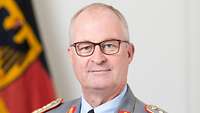
During his term of office as the 16th Bundeswehr Chief of Defence, General Eberhard Zorn has considerably driven ahead the new Bundeswehr orientation towards national and collective defence.
©
Bundeswehr/Jana Neumann -
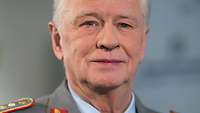
15th Chief of Defence (2010–2018), General Volker Wieker. It was during his term of office that the suspension of conscription was put into practice.
©
Bundeswehr/Christian Thiel -
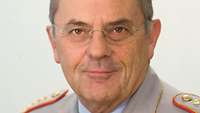
14th Chief of Defence General Wolfgang Schneiderhan shaped the transformation of the Bundeswehr to armed forces on operations, including the ISAF mission in Afghanistan.
©
Bundeswehr/Andrea Bienert -
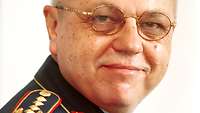
13th Chief of Defence (2000-2002) General Harald Kujat started mobilising the armed forces against international terrorism following 9/11.
©
Bundeswehr/Detmar Modes -
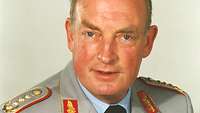
12th Chief of Defence (1999-2000) General Hans-Peter von Kirchbach commanded around 30,000 troops fighting the 1997 Oder Flood, thus becoming the "Hero of the Oder" even before his term of Office.
©
Bundeswehr/Detmar Modes -
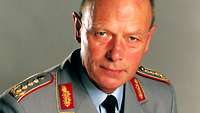
11th Chief of Defence (1996-1999) General Hartmut Bagger saw the first eastward enlargement of NATO to include Poland, the Czech Republic and Hungary. He was also an accomplished Pianist.
©
Bundeswehr/Detmar Modes -
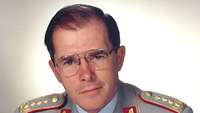
10th Chief of Defence (1991-1996) General Klaus Naumann shaped the strategic reorientation of the Bundeswehr after the reunification of Germany.
©
Bundeswehr/Anne Fischer -
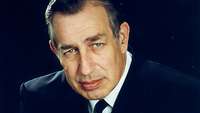
9th Chief of Defence (1986-1991) Admiral Dieter Wellershoff became the "Chief of Defence of Unification" after the Wall came down.
©
Bundeswehr -
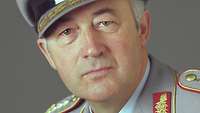
8th Chief of Defence (1983-1986) General Wolfgang Altenburg supported the controversial NATO Double-Track Decision.
©
Bundeswehr/Schaack -
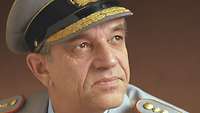
7th Chief of Defence (1978-1983) General Jürgen Brandt organised the expansion of the army by three additional brigades.
©
Bundeswehr/Wienke -
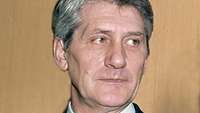
6th Chief of Defence (1976-1978) General Harald Wust was faced with serious incidents along the inner-German border during his term of Office.
©
Bundeswehr/Anne Fischer -
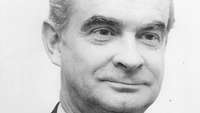
5th Chief of Defence (1972-1976) Admiral Armin Zimmermann was the first navy officer to serve in this position.
©
Bundeswehr/Günther Oed -
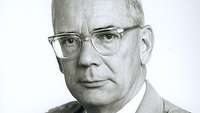
4th Chief of Defence (1966-1972) General Ulrich de Maizière, father of the eventual Minister of Defence, helped develop "Innere Führung".
©
Bundeswehr/BMVg -
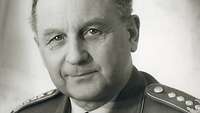
3rd Chief of Defence (1964-1966) General Heinz Trettner resigned two years after his appointment in response to a decree allowing soldiers to join unions.
©
Bundeswehr/BMVg -
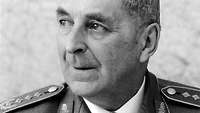
2nd Chief of Defence (1961-1963) General Friedrich Albert Foertsch had to deal with the building of the Wall, the Cuban Missile Crisis and the Spiegel Affair.
©
Bundesarchiv -
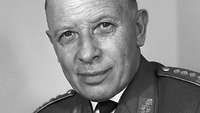
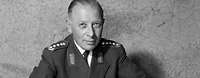
1st Chief of Defence (1957-1961) General Adolf Heusinger contributed considerably to the expansion of the Bundeswehr. He supported Germany's accession to NATO.
©
Bundeswehr/Storz


